
 1 year ago
27
1 year ago
27
ARTICLE AD BOX

The Trump administration can move forward with plans to fire tens of thousands of workers across the federal government, the Supreme Court ruled Tuesday.
A judge in California had blocked the layoffs, finding that they would likely violate federal law. But the justices granted an emergency appeal from the administration seeking permission to enforce a Feb. 11 executive order that instructed agencies to carry out dramatic “reductions in force.”
In an apparent 8-1 ruling, the high court said it was not assessing the legality of any particular agency’s layoff plans, nor any moves taken so far to implement those plans. Litigation over the downsizing efforts is sure to continue. But for now, the justices said, the administration can enforce the executive order and a memo from the Office of Management and Budget implementing that EO.
The high court’s unsigned decision — which the majority explained in two terse paragraphs — lifts an injunction issued by U.S. District Judge Susan Illston, who had blocked 21 agencies from complying with the mass layoff orders.
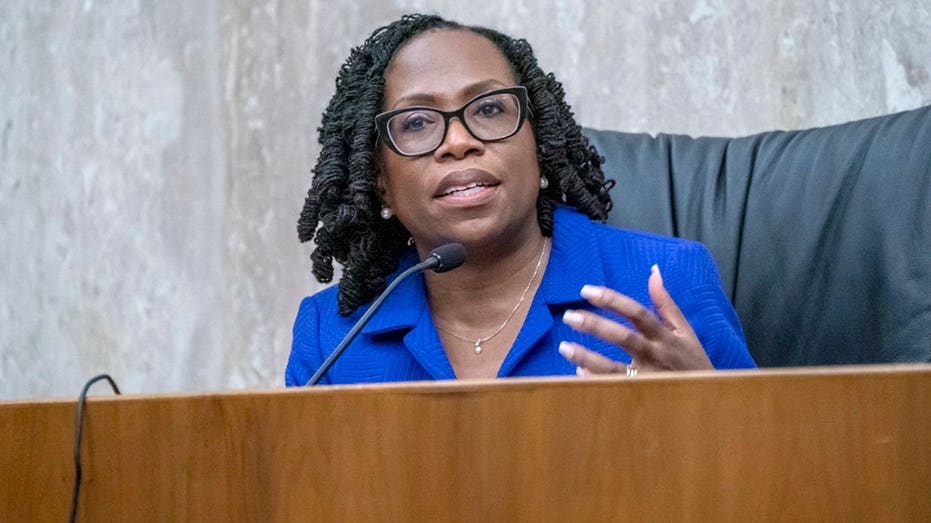
Justice Ketanji Brown Jackson was the sole member of the court to record a dissent. She said President Donald Trump is unleashing a “wrecking ball” on the federal government, and she slammed the court’s majority for its “demonstrated enthusiasm for greenlighting this President’s legally dubious actions in an emergency posture.”
Jackson, a Biden appointee, said her colleagues were inappropriately reinterpreting Illston’s findings, noting that appeals courts are supposed to adhere to a lower court’s conclusions about disputed facts. Lower courts have better command of the facts at this early stage in the litigation, she wrote in a 15-page dissent.
The groups that sued over the layoff plans — including several cities and counties, the American Federation of Government Employees and other federal worker unions — said in a statement that the ruling jeopardizes services that Americans rely on. “This decision does not change the simple and clear fact that reorganizing government functions and laying off federal workers en masse haphazardly without any congressional approval is not allowed by our Constitution,” the unions said.
Illston’s injunction, which she issued in May, had blocked most major federal agencies from moving forward with any of the complicated steps the government must take when carrying out mass layoffs. She prohibited the administration from developing reorganization plans, issuing any new RIF notifications, and executing any RIFs that were further along in the process.
The injunction halted planned layoffs at the departments of State, Treasury, Transportation, Veterans Affairs and the Social Security Administration, among others.
The justices’ action Tuesday is the latest in a string of high court wins the administration has touted, as the justices have often lifted lower-court orders blocking Trump’s policies. Less than two weeks ago, the Supreme Court handed the administration a far-reaching victory by narrowing the power of district court judges to grant nationwide relief in challenges to federal government actions.
The Trump administration described the decision as “another definitive victory for the President.” The decision “clearly rebukes the continued assaults on the President’s constitutionally authorized executive powers by leftist judges who are trying to prevent the President from achieving government efficiency,” White House spokesperson Harrison Fields said.
Trump’s attempts to dramatically shrink the federal workforce have triggered numerous lawsuits from federal employee unions, environmental organizations, Democratic-led states and local school systems, all of whom claim they will be injured by sharp reductions in federal staffing.
In her ruling in May, Illston said Trump impermissibly bypassed Congress by attempting sweeping changes at some agencies without any signoff from lawmakers — a point that Jackson reiterated in her dissent.
“While the President no doubt has the authority to manage the Executive Branch, our system does not allow the President to rewrite laws on his own under the guise of that authority,” Jackson wrote.
The Supreme Court’s latest order did not directly address separate lawsuits claiming personnel cuts to the Education Department would hobble that agency’s functions, including services for special needs children and investigations into alleged violations of federal civil rights laws by schools and universities.
In May, U.S. District Judge Myong Joun blocked about 1,300 layoffs at Education, concluding that the radical downsizing “will likely cripple the Department” and leave it unable to carry out duties assigned to it by Congress. The Education Department had about 4,100 staffers when Trump took office in January.
Joun, a Boston-based Biden appointee, said those layoffs appeared to be part of Trump’s long-stated goal of eliminating the Education Department altogether.
The Trump administration also filed an emergency appeal of Joun’s order with the Supreme Court last month, but the justices have yet to act on it.
The layoffs the Supreme Court now appears to have green-lighted at other federal agencies follow an earlier round of firings of more than 20,000 probationary employees across the executive branch. Those workers had typically been on the job for two years or less, although some had recently switched from one job to another.
In April, the justices stepped in at the Trump administration’s request to lift an order another federal judge in California issued blocking mass firings of probationary employees at several major federal agencies. The high court, over the dissent of two liberal justices, said the nonprofit groups backing the lawsuit lacked standing to challenge the firings in court.
Many of the layoffs appear to have been directed or proposed by the Department of Government Efficiency, a government-wide cost-cutting effort previously spearheaded by billionaire Tesla founder Elon Musk.
The executive order Trump issued in February instructed federal agency heads to “undertake preparations to initiate large-scale reductions in force (RIFs), consistent with applicable law” and gave DOGE personnel an important role in staffing decisions.





 English (US) ·