
 51 minutes ago
1
51 minutes ago
1
ARTICLE AD BOX
Nike spent much of the past decade making left-wing politics part of its brand and the company's stock hit a 12-year low this week.
Before we get into that, we should acknowledge that the "social justice" messaging isn't the only reason the company is struggling. Nike is losing ground to newer competitors, its products haven’t created the same excitement and consumers aren’t exactly eager to pay more for sneakers right now.
Still, it’s hard not to notice what Nike has been doing while its business has sputtered: picking fights over politics, race, patriotism, transgenderism and DEI.
TED CRUZ TAKES VICTORY LAP AS ICONIC AMERICAN BRAND'S STOCK PLUNGES TO 12-YEAR LOW
From Colin Kaepernick to the Betsy Ross flag, Dylan Mulvaney and a study involving "transgender" youth athletes that Nike quietly backed away from after OutKick exposed it, the company has built an impressive record of left-wing corporate activism.
In February 2026, it added an EEOC investigation into alleged race discrimination against white employees and job applicants to the list.
Nike wanted to be more than a shoe company. Mission accomplished.
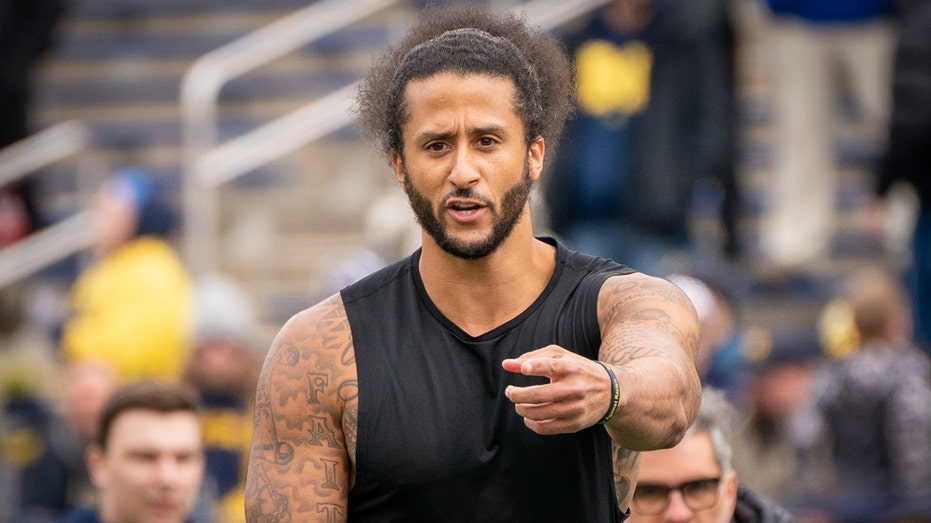
Nike made its choice clear in 2018, when it put former NFL quarterback Colin Kaepernick at the center of its 30th-anniversary "Just Do It" campaign.
Kaepernick, of course, became a national political figure after sitting, and later kneeling, during the national anthem because he said he refused to show pride in a flag for a country that "oppresses black people and people of color."
He specifically cited "police brutality" and later wore socks to an NFL practice depicting police officers as pigs and showed support for Cuban dictator Fidel Castro.
Nike decided he was the perfect guy to launch a campaign with the slogan, "Believe in something. Even if it means sacrificing everything."
At that point, Nike wasn’t simply sponsoring a former NFL quarterback. It was elevating the most divisive figure in American sports at the time and daring consumers to take a side.
THE WASHINGTON POST CAN’T QUIT COLIN KAEPERNICK
Some did. Nike received plenty of backlash, including videos of customers burning products or cutting the swooshes off their socks. But the company also received glowing coverage from corporate-media types who loved the idea of a massive American brand embracing extreme left-wing political messaging.
Nike didn’t back away from the Kaepernick experiment, either.
The following summer, it pulled a Fourth of July-themed Air Max sneaker featuring the Betsy Ross flag after Kaepernick reportedly objected to the design. Nike said it halted distribution because of concerns the shoe could "unintentionally offend."
Think about that for a second. A company built around American athletes decided that a sneaker featuring the flag associated with the country’s founding was too offensive to sell around Independence Day.
Then came 2020, when nearly all of corporate America went all-in on left-wing political activism.
And Nike was right there at the front of the line.
After George Floyd’s death, the company released its "For Once, Don’t Do It" campaign, telling Americans not to pretend there wasn’t a problem in the country. Nike publicly supported Black Lives Matter and racial-justice activism while the NBA restarted its season in the Orlando bubble with social-justice slogans on jerseys and "Black Lives Matter" painted prominently on the court.
Nike was the NBA’s apparel partner. Its logo was on the jerseys as the league put social justice slogans on players’ backs and ‘Black Lives Matter’ on the court. Nike wasn’t distancing itself from any of it.
Nike can say whatever it wants. But after Kaepernick, the Betsy Ross shoe and the NBA’s Black Lives Matter moment, it was clear the company wasn’t simply interested in making an occasional political statement.
Left-wing messaging had become as synonymous with Nike as its swoosh logo.
In 2023, Nike featured trans-identifying influencer Dylan Mulvaney, a male, in a paid Instagram promotion for women’s sports bras and leggings.
Mulvaney was already at the center of national debate after a Bud Light promotion helped trigger one of the most damaging corporate backlashes in recent memory. So, Nike wasn’t wandering blindly into a controversy nobody could have predicted.
The company saw what had happened to Bud Light and made the decision anyway.
Nike later defended Mulvaney and its support for the LGBTQ community. But it hired a male influencer to sell women’s sports bras and leggings. That was an absurd decision, and no one should have been surprised by the backlash.
Still, Nike appeared committed to the idea that the public just needed more education, more visibility and more lectures from multinational corporations.
What could possibly go wrong?
This is where Nike’s activism went from poor marketing tactics to something much more serious.
In April 2025, OutKick reported that evidence indicated Nike had helped fund a study involving "transgender" youth athletes as young as 12. The proposed research was designed to track athletic and physiological changes among young people undergoing so-called "gender-affirming care."
Researchers connected to the project said publicly that Nike had provided funding. Boston Children’s Hospital magazine later described the research as being supported, in part, by Nike.
Nike initially would not answer OutKick’s repeated questions. A company executive later said on background that the study "was never initialized" and was "not moving forward."
Then, trans-identifying researcher Joanna Harper, a male, said Nike had "pulled out" after "haters got wind of it."
So, which was it? Was the study never initialized, as Nike claimed? Or did Nike pull out after public pressure, as one of its researchers claimed?
Nike has never provided a clear public explanation that resolves that contradiction.
MARY CAIN'S BOOK AND NIKE'S TRANS-ATHLETE STUDY REVEAL THE SAME PATTERN OF CORPORATE HYPOCRISY
The company had moved beyond slapping the standard rainbow logo on its website and social media accounts during "Pride Month." It was allegedly helping fund research involving children, puberty blockers, cross-sex hormones and the future of girls’ sports.
Which is especially rich because, while this was all unfolding, Nike was telling the country how much it cared about women’s sports.
For its first Super Bowl commercial in 27 years, Nike used Caitlin Clark, A’ja Wilson, Sabrina Ionescu and other female stars in the company’s "So Win" campaign, which told viewers that women are constantly told they "can’t win."
So, which side is Nike actually on? The company can’t spend millions promoting Caitlin Clark and women’s sports, then help fund research aimed at figuring out how boys can medically alter their bodies enough to compete against girls.
Nike’s answer to that question has been a bunch of evasive statements, silence and an off-the-record claim that the study "was never initialized."
The latest chapter came in February, when the Equal Employment Opportunity Commission filed an action to enforce a subpoena against Nike.
The EEOC said it is investigating systemic allegations that Nike discriminated against white employees, job applicants and participants in training programs through DEI-related practices. The agency sought information involving hiring, promotions, layoffs, internships, mentorships, leadership-development programs and Nike’s diversity targets.
Nike has denied wrongdoing, said it is cooperating and described the escalation as surprising and unusual.
So Nike says it did nothing wrong, and maybe that’s true. The EEOC still has to prove its case.
But the optics are almost too perfect. A company that spent years lecturing Americans about racial justice and fairness is now being asked by the federal government whether its own employment practices treated workers differently because of skin color.
That’s quite a mess for a company that made DEI a central part of its corporate identity.
Nike’s stock problems go well beyond its aggressive political messaging. But the company has spent years building a brand that often seemed more interested in impressing left-wing activists than connecting with consumers in middle America.
A 12-year-low stock price should be a wake-up call. Nike needs to get back to making products people want to buy, not finding new ways to lecture them.
Just do it, Nike.
 English (US) ·