
 4 months ago
31
4 months ago
31
ARTICLE AD BOX

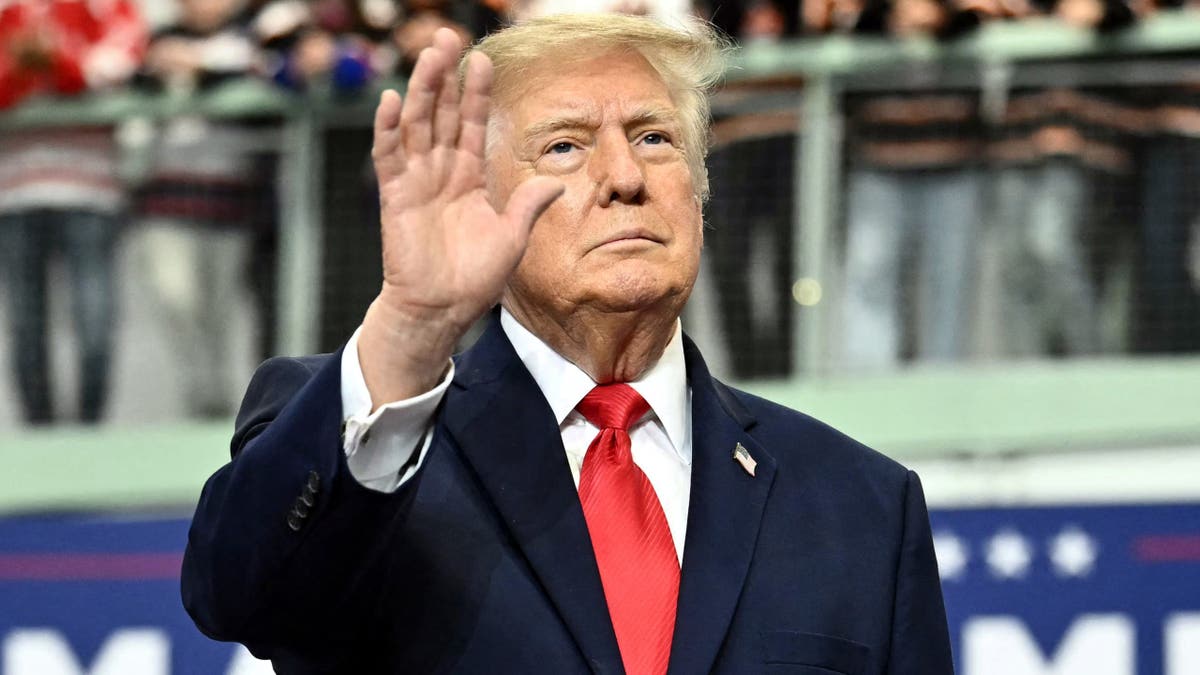
President Donald Trump’s sudden decision to scrap an AI executive order on May 21 has exposed a rift within the White House on how to regulate the emerging technology.
There are three main camps in the West Wing, per two senior White House officials, granted anonymity to discuss sensitive internal dynamics. The first, which includes former AI czar David Sacks, favors less regulation to help the industry compete against China. It was Sacks who called the president last week and derailed the EO at the last minute due to industry concerns that the order could be too onerous for the relatively nascent industry.
On the go-slow side: Defense Secretary Pete Hegseth and his undersecretary Emil Michael, a former Silicon Valley executive. They are pushing for greater barriers to Mythos-type models, according to the senior White House officials, over concerns that the technology could be used by rivals such as China.
Hegseth and Michael are among the “AI hawks who are afraid of it, who think that it could be exploited for nefarious purposes, who want to make sure that we do everything we can to make sure it [doesn’t] go to China,” the first senior White House official said.
Then, according to the White House officials, there’s the middle ground camp involving chief of staff Susie Wiles and Treasury Secretary Scott Bessent, who have pushed for a regulatory framework in which AI companies voluntarily provide the U.S. government first glance at its new models.
These disparate camps underscore the degree to which Trump administration policy is being shaped in real time, trying to respond to a rapidly-developing technology.
Despite the chaos of Trump’s last-minute decision, the order doesn’t appear dead – at least not yet. Now administration officials have another chance to make the case that their viewpoint should win the day.
The executive order that Trump almost signed called for a voluntary oversight system for AI companies to consult with the U.S. government on their latest models. It offered a framework for the federal government to preview the products before they are released to the public without the burden of a mandate.
“It wasn't government telling these companies what they could and couldn't do, but it requested that the U.S. government get a first look at any new models, just to be sure that they couldn't be exploited by bad actors,” the first senior White House official said. “It wasn't mandatory, but we did get an agreement from all of them that they would abide by it."
That version, or something close to it, is very much still on the table, the official said, believing the opportunity to convince the president of its merits exists.
"This isn't canceled, it's postponed,” the official said. “And might a clause here or there be changed? Possibly. But it's also possible that we talk to the president about it, and he says, ‘Yeah, that sounds logical. Let's just go do it.’”
The order from last week was struck down after Sack’s eleventh-hour intervention.
“David [Sacks] wants more of a hands off approach to Al and Hegseth doesn't think it goes far enough,” the second White House official said. “[National Cyber Director] Sean Cairncross [is] caught in the middle trying to do something that makes both industry happy and protects the USG [US government].”
Sacks did not respond to a request for comment. The Pentagon declined to comment.
White House spokesperson Liz Huston maintained that the president’s team is trying to strike a balance between innovation and security.
“Under President Trump’s leadership, America is winning the global AI race and leading the world in innovation,” she said. “At the same time, the Trump Administration is committed to addressing the challenges posed by this emerging technology. The President’s team is united in executing his bold agenda and maintaining this critical balance.”
A Treasury Department spokesperson said, “Thanks to President Trump, the United States remains at the forefront of both innovation and safety in artificial intelligence. Economic security is national security, and the United States Treasury is working with all of our counterparts across government, as well as with the financial services industry, to both address and harness the impacts of AI.”
The order creating a framework to help govern AI had been in the works for months, the administration officials said. But Anthropic’s release of Mythos, a highly advanced model capable of finding and exploiting unknown flaws in any IT system, forced the administration to move much quicker than intended.
In February, before the arrival of Mythos, the administration circulated a draft executive order across agencies. The draft, according to a person familiar who was briefed on it, granted anonymity because they were not authorized to discuss it, was focused on AI cybersecurity—setting security standards for public models, standardizing AI security development, funding defenses against AI-enabled cyberattacks, and directing the National Security Agency to use AI to detect federal network vulnerabilities.
In late February and early March, administration staffers began briefing Wiles, Bessent and Vice President JD Vance on what they heard from their informal networks about what Anthropic’s model had been trained on and what the AI labs were deploying internally.
Mythos’ public arrival in April startled a number of senior administration officials including Wiles and Bessent, who are severely concerned about risks posed by the advanced AI model to critical infrastructure and national security, according to the person familiar .
“Susie, as much as she’s trying to straddle the middle line, she’s very much concerned, and is a bit more hawkish than middle of the road,” the person said.
In late April, the Office of the National Cyber Director led by Cairncross began working with the major AI companies.
Over the next several weeks, the cyber office held one-on-one sessions and joint meetings with major American tech companies including OpenAI, Google, and Anthropic, who provided feedback and red lines on the language. Industry representatives were asked by ONCD counsel to sign non disclosure agreements at the outset of those meetings, according to the person familiar.
Google, OpenAI and Anthropic declined to comment.But aside from engaging with industry, the executive order that made it to Trump’s desk was closely held and did not go through the interagency process, the person said
There were two table reads on May 20, during which the administration brought AI executives to the Eisenhower Executive building and allowed them to review a hard copy of the order.
Everyone appeared in agreement, according to the senior White House officials, and the order was prepared for Trump to sign. But Sacks contacted the president on May 21, just hours before it was supposed to be signed.
“David Sacks, just having supported what [the group was] doing, just thought better of it, and contacted the president and said, ‘I think you're making a mistake,’” the first senior White House official said.
Following the Memorial Day weekend, the Trump administration is back to square one. “People are discussing all sorts of things, every option is on the table,” the person familiar said.
One of the options is massaging language that would allow the government 90 days to review new models before they’re released to the public, the person said.
Another option is to take out the portion of the executive order outlining the process for voluntary pre-public release of the models to the government on the logic that companies can just agree to a voluntary agreement by themselves.
The remaining parts of the EO would focus on establishing a Treasury-led AI cybersecurity clearing house to coordinate the patching of software vulnerabilities among other action items listed in the second section of the EO.
Cheyenne Haslett contributed to this report.

 English (US) ·